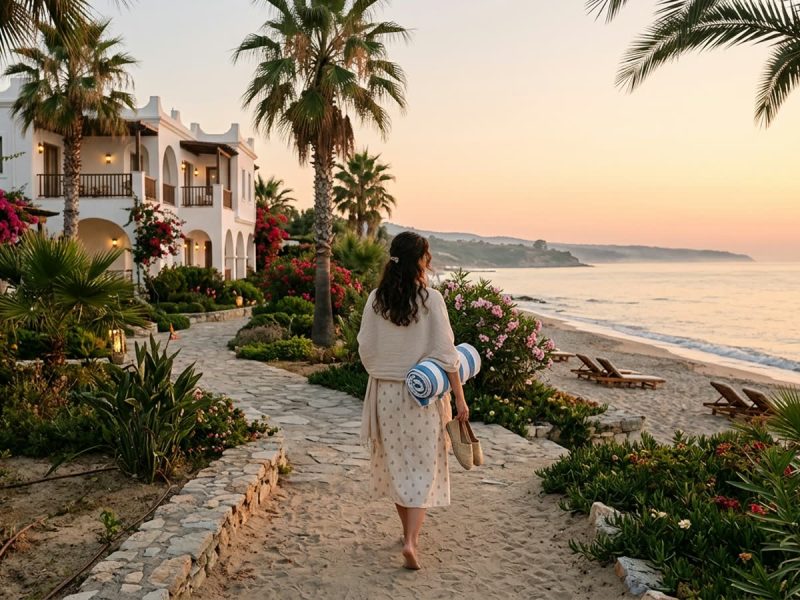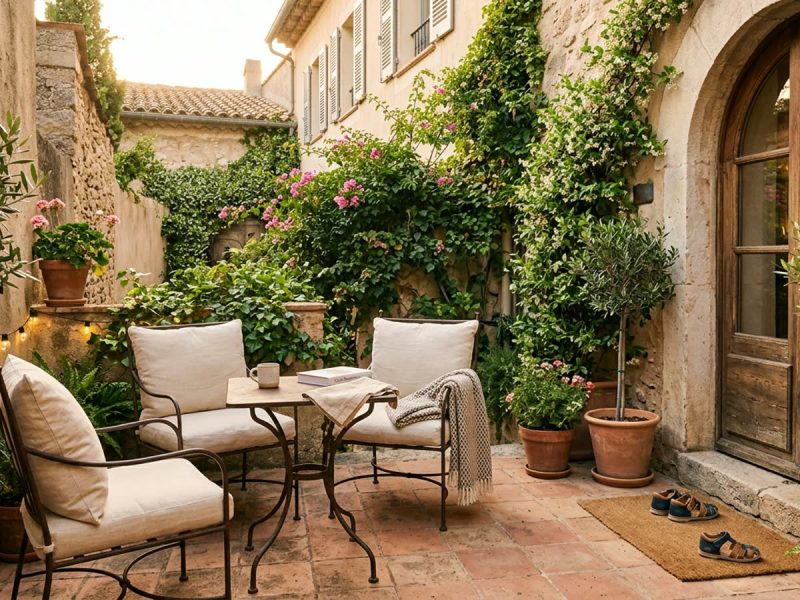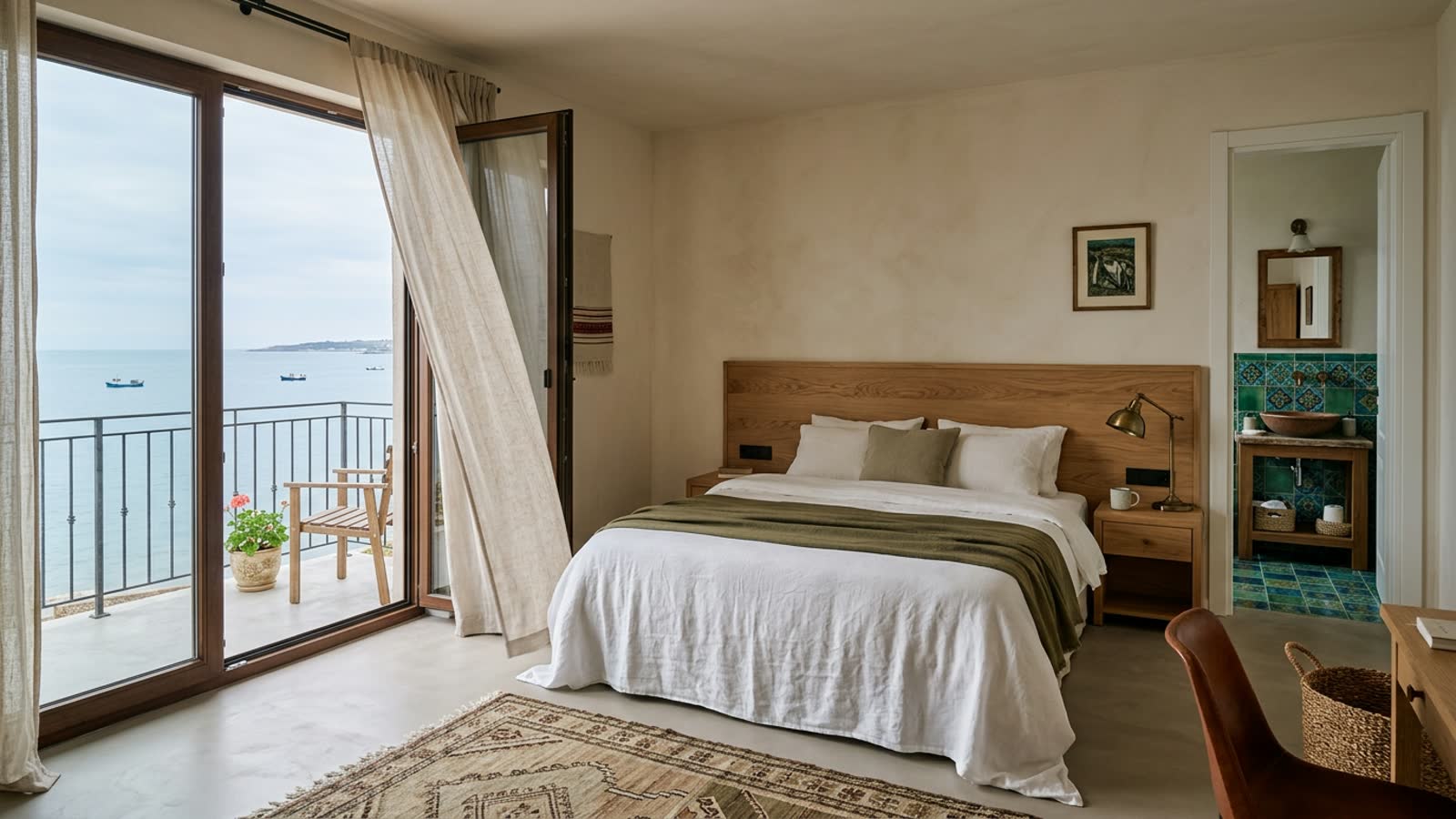
Romania’s Black Sea coast is not short of places to sleep. It has hundreds of them — socialist-era resort complexes, family pensiuni, hastily converted apartments, and the occasional genuinely considered hotel that someone designed with actual care. The last category is the smallest, and finding it requires either local knowledge or the particular patience of someone who has booked the wrong place once and does not intend to repeat the experience.
The stretch of coast from Mamaia in the north to Vama Veche at the Bulgarian border covers roughly 70 kilometres, multiple distinct resorts, and a wide range of accommodation philosophy. This guide covers the most interesting boutique and independent hotels along the entire length — the properties that have made an identifiable decision about design, service, or character, rather than simply offering a bed at a set distance from the sea.
What “Boutique” Actually Means Here
The word boutique is used loosely on the Romanian Riviera, as it is everywhere. For the purposes of this guide, a boutique or design-led hotel is one with 50 rooms or fewer, a recognisable aesthetic decision made by someone beyond “paint the walls cream and install IKEA furniture”, and at least one service feature that distinguishes it from standard three-star provision. Properties included here meet at least two of those three criteria — and most meet all three.
Chain hotels, resort complexes, and properties where “boutique” appears exclusively in the marketing copy rather than the physical space have been excluded.
Mamaia: Scale and Spectacle
Mamaia is the largest and best-known resort on Romania’s Black Sea coast — a long, narrow sandbar between the sea and Lake Siutghiol, dense with high-rise hotels, clubs, and beach clubs that operate at a scale closer to Ibiza than anywhere else on the Romanian coast. It is not, by character, boutique territory. The dominant accommodation model here is large-hotel resort, and the best examples of it are genuinely impressive — but they are impressive in the way that an efficiently run theme park is impressive, not in the way that a carefully considered small hotel is.
Within Mamaia, the marina area at the southern end of the resort has seen the most interesting recent development. A small number of independently run guesthouses and newer small hotels have appeared in the back streets of Mamaia Sat (the older village area south of the main strip), appealing to visitors who want Mamaia’s beach quality and nightlife access without the full resort-hotel experience. These properties tend to have 15–25 rooms, locally-sourced breakfast, and the kind of owner-managed attentiveness that larger operations structurally cannot replicate. Names and availability change seasonally — worth searching specifically for “Mamaia Sat accommodation” rather than “Mamaia hotel” to find them.
Eforie Nord and Eforie Sud: Therapeutic Tradition
The twin Eforie resorts occupy the coast approximately 15 kilometres south of Constanța. Both have deep roots in Romanian spa and therapeutic tourism — Eforie Nord in particular is associated with the Techirghiol therapeutic mud and the large sanatorium-era hotels that were built to administer it. This heritage creates a distinctive accommodation landscape: large institutional hotels that have been variously renovated, partially privatised, and modernised over the past three decades.
For boutique travellers, Eforie Nord offers a small number of genuinely interesting independent properties — particularly in the residential streets behind the main promenade, where villas from the interwar period have been converted into guesthouses with real architectural character. If you are drawn to the therapeutic mud tradition, some of the renovated sanatorium-era hotels offer an experience that is entirely unlike anything else on the coast — institutional in scale but with an authentic history that designer hotels cannot manufacture.
Neptun-Olimp: Quiet Elegance
Neptun and Olimp are two adjacent resorts developed primarily during the 1960s and 70s for the Romanian Communist Party elite and international diplomatic tourism. The built environment here — shaded by mature oak forests, with a different architectural language from the open seafront resorts — gives Neptun-Olimp a character that is, genuinely, closer to a southern European coastal town than to a mass-market Black Sea resort.
The forested interior of the resort contains a small number of independently run villas and small hotels that occupy converted or purpose-built structures among the trees. These are worth seeking out if you want the most architecturally interesting accommodation on the coast in a quiet setting. Olimp sits immediately south of Costinești, making it a realistic base for Beach Please attendees who want a calmer environment — though the 3–4km distance to the festival site requires transport rather than walking.
Costinești: The Festival Boutique
Costinești has historically been the coast’s most populist resort — densely booked in summer, loud during Beach Please, with an accommodation offer dominated by large pensiuni, apartment rentals, and the Obelisc Hotel complex. The boutique segment has been almost absent until recently. That is changing.
Luna Marina, opening August 2026 at Strada Pescărușului 35, is the most directly festival-positioned boutique hotel on the entire Romanian coast. With 27 rooms, a considered design brief, and a location 350 metres from the Beach Please festival gate, it fills a gap that has been visible for years: a well-made small hotel in the resort that hosts Eastern Europe’s largest hip-hop festival. The beach is 130 metres in the other direction. The Obelisc landmark is 180 metres away. For Beach Please attendees who want a real hotel room rather than a festival tent or an anonymous apartment rental, this is the obvious choice in Costinești.
Luna Marina is the only new-build design hotel on this stretch of the coast with explicit festival-week programming in mind — late-night reception, soundproofed rooms, and waitlist access to festival-week rates ahead of public availability at lunamarina.com/book-now/.
Mangalia: History at the Southern End
Mangalia is the southernmost major town on Romania’s Black Sea coast — a proper municipality rather than a resort, with a history stretching back to ancient Greek settlement (the ancient city of Callatis, whose ruins are partially visible in the modern town centre). The accommodation offer here is more varied and, at its best, more interesting than the pure resort towns to the north.
A small number of independent guesthouses and boutique hotels have opened in Mangalia in recent years, primarily in the older residential neighbourhoods behind the harbour. These suit travellers who want a base for exploring the full southern section of the coast — including day trips to the 2 Mai and Vama Veche villages — rather than committing to the full festival-resort experience further north.
Vama Veche: Bohemian and Deliberately Rough
Vama Veche sits at Romania’s southern tip, a few kilometres from the Bulgarian border. For decades it was the free-spirited alternative to the state-organised resorts to the north — clothing-optional, permissive, beloved by artists, musicians, and anyone who found the Mamaia model deadening. Its character has shifted as it has become famous, but it retains a deliberately unpolished quality that is genuine rather than performed.
Accommodation in Vama Veche runs from camping in the village to a small number of independently run guesthouses that vary enormously in quality. There is no boutique hotel here in the conventional sense, and the village actively resists the kind of branded hospitality product that would arrive with renovated floors and a lobby bar. If you want to understand what the Romanian coast looks like when it has not been organised for tourism, Vama Veche is the answer. If you want a considered hotel room, come north.
How to Choose Your Base
The choice of resort fundamentally determines your experience. Mamaia delivers scale, energy, and the best-developed beach infrastructure on the coast, with the trade-off of a tourist-industry uniformity. Neptun-Olimp offers calm, shade, and architectural interest in exchange for relative distance from everything else. Vama Veche gives you character and freedom in exchange for basic amenities. And Costinești, during Beach Please week, offers something no other resort on the coast provides: the combination of a major international festival, a good beach, and — since August 2026 — a properly designed boutique hotel within 350 metres of the festival gate.
For 2026, the most interesting new entry in the Black Sea boutique market is at Costinești, for the straightforward reason that Luna Marina represents the first attempt on this coast to build a small hotel specifically around the intersection of festival culture and proper hospitality. That combination does not exist anywhere else between Mamaia and Vama Veche.
Booking Considerations Across the Coast
Peak season on the Romanian coast runs July–August, with Beach Please week (8–12 July) creating a specific demand spike in Costinești and the immediately surrounding area that does not affect other resorts at the same level. Mamaia and Neptun-Olimp follow standard summer patterns. Vama Veche operates on informal booking norms. The general principle applies coast-wide: anything desirable at a fair price in a good location fills early, and 2026 will follow the same pattern as every year before it.
Luna Marina opens August 2026, four minutes on foot from the Beach Please gate. Join the waitlist at lunamarina.com/book-now/ for opening-week pricing.