Most people approach hotel booking for festival travel the same way they approach hotel booking for any other trip: sort by price, check the star rating, look at a few photos. The result is frequently a technically adequate room that is practically useless for what they actually need it to do. A standard hotel booking checklist — location, breakfast, parking, wifi — does not capture what a hotel needs to deliver across five nights of a major summer festival, where you are sleeping at 7am, waking at noon, returning in the evening covered in sunscreen, and occasionally needing to store a bag at 3am because the reception desk is, in theory, open 24 hours.
This is the checklist that replaces the standard one for festival hotel booking. Ten items. All of them verifiable before you book. Each one matters more at a festival than at any other kind of trip.
1. Walking Distance to the Festival Gate
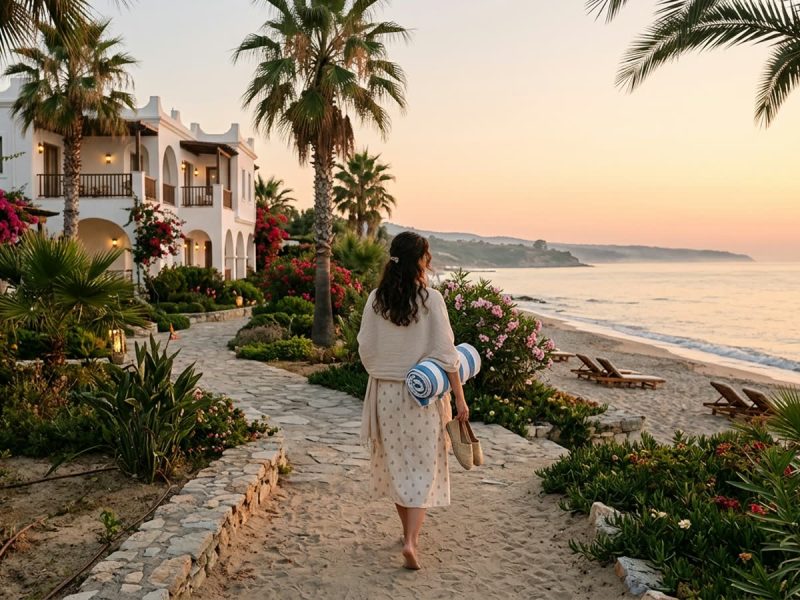
This is the most important item on the list by a margin that dwarfs every other consideration. Not “proximity” in the vague marketing sense — actual walking time, measured along the route you will use at midnight on a Tuesday carrying nothing and at 3am on a Saturday carrying a jacket. For Beach Please 2026, the festival gate is on the southern section of Plaja Costinești, accessible via the beachfront path. Properties within 500 metres are genuinely walking distance. Properties beyond 1 kilometre involve a walk that feels meaningfully different at the end of a long festival night.
Verify the distance yourself using maps before booking. “Close to the festival” is not a standardised claim. Some properties use it to describe a 20-minute walk. Do not take the description — take the coordinates and measure them.
2. Noise Insulation
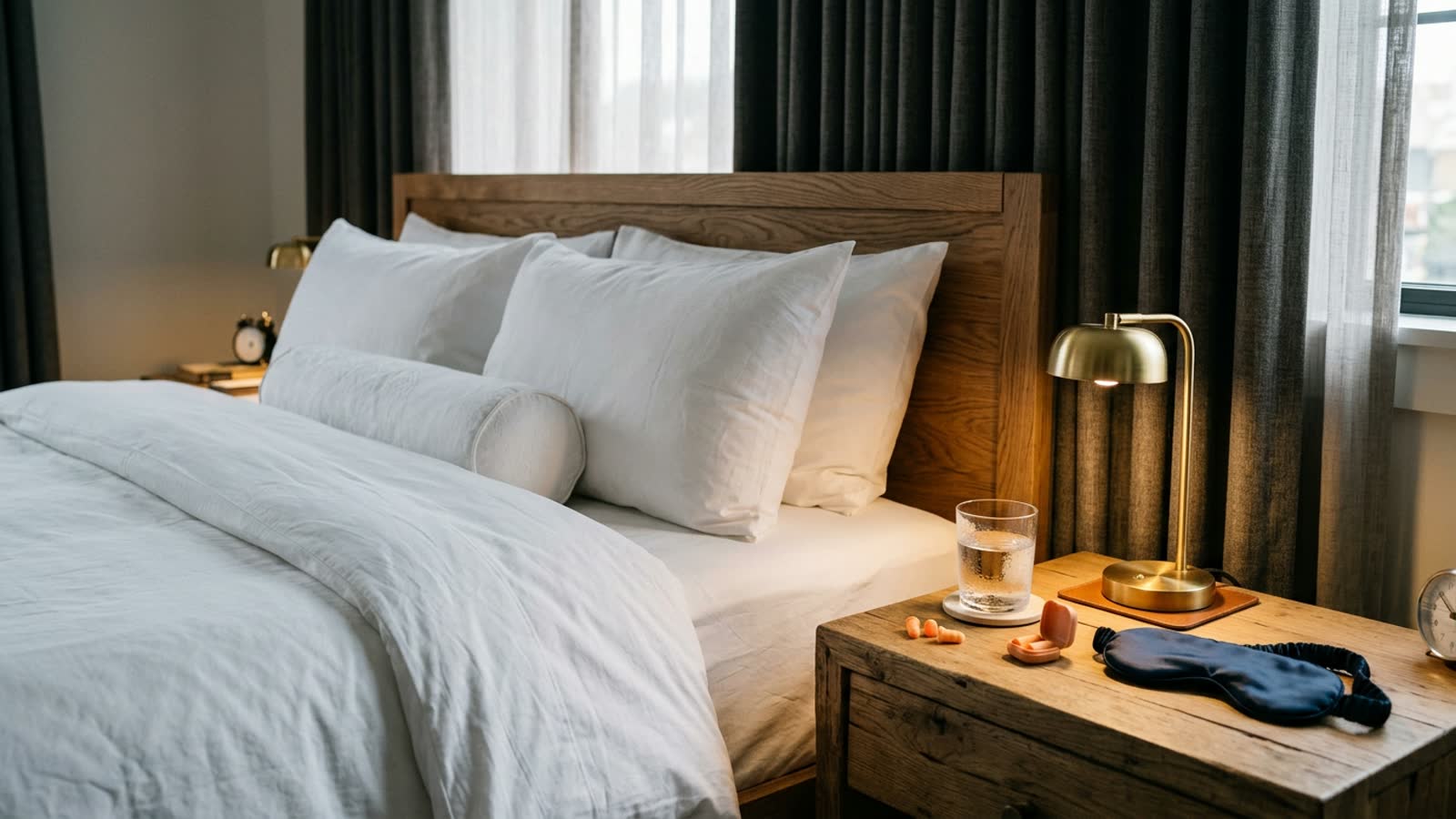
A festival hotel’s job is to give you sleep despite the fact that a major outdoor music event is running within a few hundred metres of your room. This requires actual noise insulation — not just “it’s quiet here normally” but physical evidence of sound management: double-glazed windows, solid wall construction, and rooms that face away from the main noise sources where possible.
How to check this without visiting: ask the hotel directly what their noise insulation specification is. A property that has thought about this can answer the question. One that has not will give you a vague reassurance about the “peaceful location”. The first answer means something; the second means nothing.
Beach Please 2026 runs sets until 6am. You need to sleep from roughly 7am to noon each day to function across a five-day festival. Noise insulation is the difference between that being possible and it being aspirational.
3. Air Conditioning (Confirmed, Not Assumed)
Costinești in July averages daytime highs of 28–33°C, with overnight temperatures that rarely drop below 22°C. A room without air conditioning at those temperatures is not comfortable for sleeping, particularly when you need to sleep through the hottest part of the day (10am–2pm). A fan does not solve this problem; it redistributes warm air. An AC unit solves it.
Do not assume air conditioning from photographs of ceiling fans, or from listings that describe the room as “well-ventilated”. Confirm explicitly — “does every room have a dedicated air conditioning unit?” — before booking. The answer should be yes, and it should be stated as a factual confirmation rather than a warm reassurance about summer breezes.
4. Blackout Curtains
Sunrise in Costinești in early July is approximately 5:30am. If you are returning from the festival at 6am and trying to sleep until noon, sunrise through thin curtains at 5:30am will wake you. This is not a minor inconvenience across a five-night festival — it is a consistent sleep deficit that compounds daily. Blackout curtains are a specific product; they are not the same as “heavy curtains” or “lined curtains”. Confirm explicitly before booking.
5. Late-Night and 24-Hour Reception
Many Costinești hotels and guesthouses operate with a staffed reception until 10pm or midnight and then move to a key-drop or intercom system. For a standard holiday, this is usually fine. During Beach Please week, when guests are returning between 2am and 8am on multiple consecutive nights, “call the number on the door and we will come” is a different experience from “someone is always at the desk”. Specific scenarios that require live reception: arriving late on the first day after a delayed journey, needing to store or retrieve luggage outside normal hours, losing a key card, reporting a problem.
Ask the hotel directly: “Is reception staffed 24 hours during festival week (8–12 July)?” If the answer is yes, confirm whether this is specific to festival week or year-round. Festival-week 24/7 reception is a specific operational commitment, and a hotel that has made it knows it and can confirm it clearly.
6. Secure Luggage Storage
Luggage storage matters on at least two of your festival days: arrival day (when you arrive before the room is ready) and departure day (when you check out before you want to leave Costinești). A hotel with a proper luggage room and a front-desk staffed to manage it removes these logistical pinch-points. A hotel that expects you to manage your luggage yourself, or that has no designated storage, creates avoidable friction at the exact moments when the festival schedule already has enough variables.
Confirm that secure luggage storage is available and that there is staff to manage access to it. An empty corridor with a padlock on it is not the same as a staffed luggage room.
7. Late Breakfast
Standard hotel breakfast windows (7–10am) are structurally incompatible with festival sleeping patterns. If your hotel offers breakfast and you want to access it, the practical window is 11am–1pm — after the 7am finish, after sleep, before the 3pm festival opening. A hotel that ends breakfast at 10am is offering you a service you will use once in five days, on the morning you arrived.
Ask whether the hotel extends breakfast hours during festival week. Some properties do this specifically for festival guests. Those that do are demonstrating that they have thought about the actual pattern of their guests’ days; those that have not have imported a standard hotel schedule into a non-standard week.
8. Flexible Check-In
Standard check-in at 3pm is designed around a world where guests arrive in the afternoon and go out for dinner. Festival week in Costinești operates on a different schedule: people arrive at various hours of the day, often with luggage from long journeys, wanting to drop bags and get to the beach or the festival. A hotel that offers flexible check-in — or at minimum, guaranteed luggage storage from any arrival time — removes the friction of managing the gap between your arrival and the official room-ready time.
9. In-Room Safe or Secure Valuables Storage
Festivals involve carrying more valuable electronics, documents, and cash than a normal beach holiday. Phone, charger, backup battery, wallet, keys, passport if you are travelling internationally — the sum value of what you routinely carry to and from the festival site is significant. An in-room safe, or a front-desk safe with guest access, means you are not making constant judgements about what to take and what to leave. It also means that if something is lost or stolen at the festival, the rest of your valuables are secure at the hotel.
10. No-Minimum Stay Requirement
Some Costinești properties apply minimum-stay requirements during festival week — typically 3 or 5 nights — which is generally fine for Beach Please attendees who are there for the full run. Check the minimum stay before booking if your plans might involve arriving late or leaving early, and verify the penalty structure if your plans change. A 5-night minimum stay on a no-refund basis for a festival you might leave after 3 nights is a significant financial risk that is worth knowing about before you commit.
Using This Checklist
The ten items above can all be confirmed before booking by asking the hotel directly. Most of them require a specific question rather than an assumption from the listing. Properties that have thought about festival-week guests can answer all ten quickly and specifically; properties that have not will hedge, generalise, or not know.
The process: make a shortlist based on location (walking distance above all), then work through this checklist on your shortlisted properties. Eliminate anything that cannot confirm air conditioning, noise insulation, and 24-hour reception. Prioritise the properties that confirm all ten. The result is a hotel that will actually serve you through five festival days rather than one that looked reasonable on a booking screen.
A Note on New-Build vs. Established Properties
Older Costinești hotels have the advantage of an established track record — reviews, known quantities, predictable quality. Newer properties do not have that evidence base yet. The trade-off is that newer properties have the advantage of having been built after the question “what do festival-week guests actually need?” was asked and incorporated into the brief.
Luna Marina was designed with this checklist in mind. The brief included soundproofing, blackout curtains, confirmed AC in every room, 24-hour festival-week reception, secure luggage storage, and a location at Strada Pescărușului 35 — 350 metres from the festival gate. That is not a coincidence of features that happen to align with the above list; it is the result of building a hotel specifically for the Beach Please context.
Luna Marina opens August 2026, four minutes on foot from the Beach Please gate. Join the waitlist at lunamarina.com/book-now/ for opening-week pricing.